- Agni Yoga (AY)
- About Cheryl
- Services
- Contact Info
- Sponsorship
- E-Store
- Special Thanks To You
- Aum My Students
- Sun Salutations
- Academy of Anatomy
- Sanskrit
- Meditaton
- The Science Of Agni Yoga
- Psalms Of The Heart
- Sacred Hymns To Agni
- Heart Of Consciousness
- Misterios De Ioga
- Pre-Eminent Domain
- The Power Of Yoga
- Newsletter
- Calendar
- Heart Practice & Pricing
- Artisan Class & Videos
- WebBlog
- Highways To Center
- Universal Yoga
- Site Map
sanskrit

Yoga Asana Index

A - B - C - D - E - F - G - H - I - J - K - L - M - N - O - P - R - S - T - U - V - W - X - Y - Z
A
Adept Pose (sid-dhah-sa-na) Siddha-asana - The Sanskrit word siddha means accomplished or adept, one who has attained the highest. The name implies the attainment of a perfectly stilled mind and the experience of peace that results from meditation. The siddha-asana is a recommended pose for meditation.
B
Bow Pose (dha-noor-ah-sa-na) Dhanura-asana -The Sanskrit word dhanur means bow-shaped, curved or bent. The bow referred is a bow as in "bow and arrow." This asana is so named because the body mimics the shape of a bow with its string stretched back ready to shoot an arrow.
C
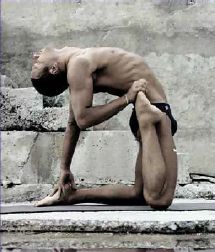
Camel Pose (oosh-trah-sa-na) Ushtra-asana-The Sanskrit word ushtra means camel.
Child Pose (ba-lah-sa-na) Bala-asana -The Sanskrit word bala means child.
Cobra Pose (na-gah-sa-na) Naga-asana - The Sanskrit word naga means snake or serpent. The naga-asana is also known as the bhujanga-asana. The Sanskrit word bhujanga, which also means snake, is derived from the root bhuj which means to bend or curve.
Corpse Pose (sha-vah-sa-na) Shava-asana - The Sanskrit word shava means corpse hence this is the Corpse. The shava-asana is also known as the mrta-asana.
Cow-face Pose (go-moo-khah-sa-na) Gomukha literally means "cow face" in Sanskit.
E
Eagle Pose (ga-roo-dah-sa-na) Garuda-asana - The Sanskrit word garuda means eagle. In Hindu mythology Garuda is known as the king of birds. He transports the God Vishnu (shown with a bow and arrow in the illustration to the left) and is said to be eager to help humanity fight againt demons.
F
Forward-bend Pose (oo-grah-sa-na) Ugra-asana - The Sanskrit word ugra means powerful, mighty, strong or noble. We usually keep this posture untranslated but it can be called the noble or powerful posture. Also known as the pascimottana-asana or the brahmacharya-asana. The word pascima can mean behind, later, last or final but it literally means "western" as in the direction. Pascimottana thus means back-stretching posture.
Fish Pose (maht-see-yah-sa-na) Matsya-asana - The Sanskrit word matsya means fish, therefore this is the fish posture. Matsya (depicted to the left) is a divine being, found in Hindu mythology, that saved mankind from a universal flood.
H
Half Moon Pose (ard-ha-chun-drah-sa-na) Ardhachandra-asana - The Sanskrit word ardhameans "half," and the word chandra means "moon," thus, this is the "half moon" posture.
Half Spinal Twist Pose (ard-ha-mat-syen-drah-sa-na) Ardha-matsyendra-asana - Ardhameans half. Matsyendra is one of many Siddhas or masters who where accomplished Yogis mentioned in the medieval Yoga text the Hatha-Yoga-Pradipika. This posture posture is traditionally called the Spinal Twist because the spinal column is twisted gently.
Hand-Foot-Big Toe (ha-sta-pah-don-goo-stah-sa-na) Hasta-pada-angusta-asana - The Sanskrit word hasta means hand, pada means foot, and angusta means big toe therefore this is the hand-foot-big toe posture.
Headstand Pose (sir-shah-sa-na) Sirsha-asana - The Sanskrit word sirsha means head. This posture is the well-known headstand posture, and perhaps second only to the padma-asanaor lotus posture, is widely identified with the practice of Yoga.
Hero Pose (veer-ah-sa-na) Vira-asana - The Sanskrit word vira means hero, brave or eminent man, or warrior.
K
King of the Dance Pose (nah-tah-raj-ah-sa-na) Nataraja-asana - The Sanskrit word natameans dancer and raja means king. Nataraja is another name for Shiva, the Lord of the Dance, whose cosmic dance is the creation and destruction of the world.
L
Locust Pose (sha-la-bhah-sa-na) Shalabha-asana - The Sanskrit word Shalabha means locust or grasshopper. There is a variation of this posture called the viparita-shalabha-asana. The Sanskrit word viparita means "reverse." This is an advanced variation not covered here.
Lion Pose (sin-gha-sa-na) Simha-asana - The Sanskrit word simha which literally means "the powerful one" is the word for "lion." This, therefore is known as the lion posture, and one performing it can be said to resemble a roaring lion about to attack.
Lotus Pose (pud-mah-sa-na) Padma-asana - The Sanskrit word naga means snake or serpent. The naga-asana is also known as the bhujanga-asana. The Sanskrit word bhujanga, which also means snake, is derived from the root bhuj which means to bend or curve.
M
Mountain Pose (ta-dah-sa-na) Tada-asana - The Sanskrit word tada means mountain. This posture is also known by the name samasthiti-asana. Sama means unmoved, equilibrium, and sthiti means standing upright or firmly, abiding, remaining, thus samasthiti means standing firmly without moving.
O
One-Legged Pose (eka-pod-ah-sa-na) Ekapada-asana - The Sanskrit word eka means one and pada means foot making this the one-foot, or more commonly, one-legged pose.
P
Plow Pose (hull-ah-sa-na) Hala-asana - The The Sanskrit word Hala means plow, as in a traditional plow that is drawn by a horse or oxen. When performing this posture your body resembles a plow.
Powerful or Noble Pose (oo-grah-sa-na) Ugra-asana - The Sanskrit word ugra means powerful, mighty, strong or noble. We usually keep this posture untranslated but it can be called the noble or powerful posture.
R
Restrained Angle Pose (ba-dah-cone-ah-sa-na) Baddha-kona-asana - The Sanskrit word baddha means a bond, chain, caught or restrained. The word pada means foot, and konameans corner or angle therefore this is the restrained-foot-angle posture.
S
Salutation Pose (ahn-jah-nay-ah-sa-na) Anjanaya-asana The Sanskrit word anjaneya means salutation or praise from the root anj which means to honor, to celebrate, to anoint.
Scorpion Pose (vrik-shah-sa-na) Vrischika-asana - The Sanskrit word for scorpion is Vrischika. This posture is so named because the body resembles a scorpion with its tail arched above its head ready to sting its victim. Although it may not be a simple posture for beginners to perform, the Scorpion is not as difficult as it may at first seem.
Shooting Bow Pose (ah-car-nah da-noor ah-sa-na) - Akarna-dhanura-asana - The Sanskrit word karna means ear and the prefix "a" means near to or towards. Dhanur means bow-shaped, curved or bent. The "bow" here referred to is a bow as in "bow and arrow." Literally we could translate this as the near-the-ear bow posture but because of the obvious appearance of the posture we'll call it the shooting bow posture.
Shoulder Stand Pose (sar-vong-ah-sa-na) Sarvanga-asana - The Sanskrit word sarvaanga means limb or body. sarvanga therefore translates as either "all-limb" or "whole-body posture". It is so named because of the benefit it provides to the entire body. It is commonly referred to as the "shoulder-stand" because one is essentially standing on one's shoulders.
Sun Salutation Pose (soor-yee-ah-nahma-skar) Surya-namaskar - The Sanskrit word suryameans sun. Namaskar is the Hindi word for Namaste, from the root nam, to bow. Namaskar means salutation, salute, greeting or praise.
T
Thunderbolt Pose (vuh-drah-sa-na) Vajra-asana - The Sanskrit word vajra means thunderbolt or diamond.
Tree Pose (vrik-shah-sa-na) Vriksha-asana - The Sanskrit word vriksha means tree, thus this is the Tree Posture.
Triangle Bow Pose (tri-cone-ah-sa-na) Trikona-asana - The Sanskrit word tri means three and kona means corner or angle. Thus "three corner or three angle posture" is often called the triangle posture. This posture is also known as the utthita trikona-asana. Utthita means stretched or extended thus this is the Extended Triangle Pose.
Turned Side-Angle (par-ee-vrit-ah parsh-va-cone-ah-sa-na) Parivritta-parshvakona-asana - The Sanskrit word parivritta means revolved, turned round or back, parsva means side and kona means angle.
W
Wheel Pose (chu-krah-sa-na) Chakra-asana - Chakra, from the root cak ("to move") means wheel and therefore this is the Wheel Posture.
The cakra-asana is also known as the urdhva-dhanurasana. Urdhva means raised, elevated or upright and dhanur means bow. Both "wheel posture" and "raised bow posture" describe the appearance of this asana.
Wind Relieving Pose (pa-vana mook-tah-sa-na) Pavana-mukta-asana - The Sanskrit word pavana means air or wind and mukta means freedom or release, therefore this is the "wind relieving posture" so named because it assists in releasing trapped digestive gas from the stomach and intestines.
Bow Pose (dha-noor-ah-sa-na) Dhanura-asana -The Sanskrit word dhanur means bow-shaped, curved or bent. The bow referred is a bow as in "bow and arrow." This asana is so named because the body mimics the shape of a bow with its string stretched back ready to shoot an arrow.
Baddha Vatsayasana in Yoga Mudra
Bound Equestrian Pose
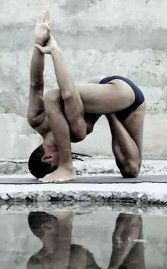
Demonstrated by André Sidersky
Professional Photography : Online Asana Index
200 KEY SANSKRIT TERMS OF YOGA
* Yoga Posture Index
A - B - C - D - G - H - I - J - K - L - M - N - O - P - R - S - T - U - V - Y
A
Abhyâsa — practice; cf. vairâgya
Âcârya (sometimes spelled Acharya in English) — a preceptor, instructor; cf. guru.
Advaita (“nonduality”) — the truth and teaching that there is only One Reality (âtman, brahman), especially as found in the Upanishads; see also Vedânta.
Ahamkâra (“I-maker”) — the individuation principle, or ego, which must be transcended; cf. asmitâ; see also buddhi, manas.
Ahimsâ (“nonharming”) — the single most important moral discipline (yama).
Âkâsha (“ether/space”) — the first of the five material elements of which the physical universe is composed; also used to designate “inner” space, that is, the space of consciousness (called cid-âkâsha).
Amrita (“immortal/immortality”) — a designation of the deathless Spirit (âtman, purusha); also the nectar of immortality that oozes from the psychoenergetic center at the crown of the head (see sahasrâra-cakra) when it is activated and transforms the body into a “divine body” (divya-deha).
Ânanda (“bliss”) — the condition of utter joy, which is an essential quality of the ultimate Reality (tattva).
Anga (“limb”) — a fundamental category of the yogic path, such as âsana, dhâranâ, dhyâna, niyama, prânâyâma, pratyâhâra, samâdhi, yama; also the body (deha, sharîra).
Âranyaka (“that which pertains to the forest”) — an early type of ritual text used by forest-dwelling renouncers; cf. Brahmana, Upanishad, Veda.
Arjuna (“White”) — one of the five Pandava princes who fought in the great war depicted in the Mahâbhârata, disciple of the God-man Krishna whose teachings can be found in the Bhagavad-Gîtâ.
Âsana (“seat”) — a physical posture (see also anga, mudrâ); the third limb (anga) of Patanjali’s eightfold path (astha-anga-yoga); originally this meant only meditation posture, but subsequently, in Hatha-Yoga, this aspect of the yogic path was greatly developed.
Âshrama (“that where effort is made”) — a hermitage; also a stage of life, such as brahmacarya, householder, forest dweller, and complete renouncer (samnyâsin).
Ashta-anga-yoga, ashtanga-yoga (“eight-limbed union”)—the eightfold Yoga of Patanjali, consisting of moral discipline (yama), self-restraint (niyama), posture (âsana), breath control (prânâyâma), sensory inhibition (pratyâhâra), concentration (dhâranâ), meditation (dhyâna), and ecstasy (samâdhi), leading to liberation (kaivalya).
Asmita (“I-am-ness”) — a concept of Patanjali’s eight-limbed Yoga, roughly synonymous with ahamkâra.
Âtman (“self”) — the transcendental Self, or Spirit, which is eternal and superconscious; our true nature or identity; sometimes a distinction is made between the âtman as the individual self and the parama-âtman as the transcendental Self; see also purusha; cf. brahman.
Avadhuta (“he who has shed [everything]”) — a radical type of renouncer (samnyâsin) who often engages in unconventional behavior.
Avidya (“ignorance”) — the root cause of suffering (duhkha); also called ajnâna; cf. vidyâ
Âyurveda, Âyur-veda (“life science”) — one of India’s traditional systems of medicine, the other being South India’s Siddha medicine.
Return-A
B
Bandha (“bond/bondage”) — the fact that human beings are typically bound by ignorance (avidyâ), which causes them to lead a life governed by karmichabit rather than inner freedom generated through wisdom (vidyâ,jnâna).
Bhagavad-Gîtâ (“Lord’s Song”) — the oldest full-fledged Yoga book found embedded in the Mahâbhârata and containing the teachings on Karma-Yoga (the path of self-transcending action), Sâmkhya-Yoga (the path of discerning the principles of existence correctly), and Bhakti-Yoga (the path of devotion), as given by the God-man Krishna to Prince Arjuna on the battlefield 3,500 years or more ago.
Bhâgavata-Purâna (“Ancient [Tradition] of the Bhâgavatas”) — a voluminous tenth-century scripture held sacred by the devotees of the Divine in the form of Vishnu, especially in his incarnate form as Krishna; also called Shrîmad-Bhâgavata.
Bhakta (“devotee”) — a disciple practicing Bhakti-Yoga.
Bhakti (“devotion/love”) — the love of the bhakta toward the Divine or the guru as a manifestation of the Divine; also the love of the Divine toward the devotee.
Bhakti-Sûtra (“Aphorisms on Devotion”) — an aphoristic work on devotional Yoga authored by Sage Nârada; another text by the same title is ascribed to Sage Shândilya.
Bhakti-Yoga (“Yoga of devotion”) — a major branch of the Yoga tradition, utilizing the feeling capacity to connect with the ultimate Reality conceived as a supreme Person (uttama-purusha).
Bindu (“seed/point”) — the creative potency of anything where all energies are focused; the dot (also called tilaka) worn on the forehead as indicative of the third eye.
Bodhi (“enlightenment”) — the state of the awakened master, or buddha.
Bodhisattva (“enlightenment being”) — in Mahayana Buddhist Yoga, the individual who, motivated by compassion (karunâ), is committed to achieving enlightenment for the sake of all other beings.
Brahma (“he who has grown expansive”) — the Creator of the universe, the first principle (tattva) to emerge out of the ultimate Reality (brahman).
Brahmacarya (from brahma and carya “brahmic conduct”) — the discipline of chastity, which produces ojas.
Brahman (“that which has grown expansive”) — the ultimate Reality (cf. âtman, purusha).
Brahmana — a brahmin, a member of the highest social class of traditional Indian society; also an early type of ritual text explicating the rituals and mythology of the four Vedas; cf. Âranyaka, Upanishad, Veda.
Buddha (“awakened”) — a designation of the person who has attained enlightenment (bodhi) and therefore inner freedom; honorific title of Gautama, the founder of Buddhism, who lived in the sixth century B.C.E.
Buddhi (“she who is conscious, awake”) — the higher mind, which is the seat of wisdom (vidyâ, jnâna); cf. manas.
Return-B
C
Chakra (“wheel”) — literally, the wheel of a wagon; metaphorically, one of the psycho-energetic centers of the subtle body (sûkshma-sharîra); in Buddhist Yoga, five such centers are known, while in Hindu Yoga often seven or more such centers are mentioned: mûla-âdhâra-cakra (mûlâdhâra-cakra) at the base of the spine, svadhishthâna-cakra at the genitals, manipura-cakra at the navel, anâhata-cakra at the heart, vishuddha- or vishuddhi-cakra at the throat, âjnâ-cakra in the middle of the head, and sahasrâra-cakra at the top of the head. See chakra chart.
Cin-mudrâ (“consciousness seal”) — a common hand gesture (mudrâ) in meditation (dhyâna), which is formed by bringing the tips of the index finger and the thumb together, while the remaining fingers are kept straight.
Cit (“consciousness”) — the superconscious ultimate Reality (see âtman, brahman).
Citta (“that which is conscious”) — ordinary consciousness, the mind, as opposed to cit.
D
Darshana (“seeing”) — vision in the literal and metaphorical sense; a system of philosophy, such as the yoga-darshana of Patanjali; cf. drishti.
Deva (“he who is shining”) — a male deity, such as Shiva, Vishnu, or Krishna, either in the sense of the ultimate Reality or a high angelic being.
Devî (“she who is shining”) — a female deity such as Pârvatî, Lakshmî, or Râdhâ, either in the sense of the ultimate Reality (in its feminine pole) or a high angelic being.
Dhâranâ (“holding”) — concentration, the sixth limb (anga) of Patanjali’s eight-limbed Yoga.
Dharma (“bearer”) — a term of numerous meanings; often used in the sense of “law,” “lawfulness,” “virtue,” “righteousness,” “norm.”
Dhyâna (“ideating”) — meditation, the seventh limb (anga) of Patanjali’s eight-limbed Yoga.
Dîkshâ (“initiation”) — the act and condition of induction into the hidden aspects of Yoga or a particular lineage of teachers; all traditional Yoga is initiatory.
Drishti (“view/sight”) — yogic gazing, such as at the tip of the nose or the spot between the eyebrows; cf. darshana.
Duhkha (“bad axle space”) — suffering, a fundamental fact of life, caused by ignorance (avidyâ) of our true nature (i.e., the Self or âtman).
Return-C
G
Gâyatrî-mantra — a famous Vedic mantra recited particularly at sunrise: tat savitur varenyam bhargo devasya dhîmahi dhiyo yo nah pracodayât, “Let us contemplate that most excellent splendor of God Savitri so that he may inspire our visions."
Gheranda-Samhitâ(“[Sage] Gheranda’s Compendium”) — one of three major manuals of classical Hatha-Yoga, composed in the seventeenth century; cf. Hatha-Yoga-Pradîpikâ, Shiva-Samhitâ .
Goraksha (“Cow Protector”) — traditionally said to be the founding adept of Hatha-Yoga, a disciple of Matsyendra.
Granthi (“knot”) — any one of three common blockages in the central pathway (sushumnâ-nâdî) preventing the full ascent of the serpent power (kundalinî-shakti); the three knots are known as brahma-granthi (at the lowest psychoenergetic center of the subtle body), the vishnu-granthi (at the heart), and the rudra-granthi (at the eyebrow center).
Guna (“quality”) — a term that has numerous meanings, including “virtue”; often refers to any of the three primary “qualities” or constituents of Nature (prakriti): tamas (the principle of inertia), rajas (the dynamic principle), and sattva (the principle of lucidity).
Guru (“he who is heavy, weighty”) — a spiritual teacher; cf. acarya.
Guru-bhakti (“teacher devotion”) — a disciple’s self-transcending devotion to the guru; see also bhakti.
Guru-Gîtâ (“Guru’s Song”) — a text in praise of the guru, often chanted in âshramas.
Guru-Yoga (“Yoga [relating to] the teacher”) — a yogic approach that makes the guru the fulcrum of a disciple’s practice; all traditional forms of Yoga contain a strong element of guru-yoga.
H
Hamsa (“swan/gander”) — apart from the literal meaning, this term also refers to the breath (prâna) as it moves within the body; the individuated consciousness (jîva) propelled by the breath; see jîva-âtman; see also parama-hamsa.
Hatha-Yoga (“Forceful Yoga”) — a major branch of Yoga, developed by Goraksha and other adepts c. 1000 C.E., and emphasizing the physical aspects of the transformative path, notably postures (âsana) and cleansing techniques (shodhana), but also breath control (prânâyâma).
Hatha-Yoga-Pradîpikâ (“Light on Hatha-Yoga”) — one of three classical manuals on Hatha-Yoga, authored by Svâtmârâma Yogendra in the fourteenth century.
Hiranyagarbha (“Golden Germ”) — the mythical founder of Yoga; the first cosmological principle (tattva) to emerge out of the infinite Reality; also called Brahma.
Return-G
I
Idâ-nâdî(“pale conduit”) — the prâna current or arc ascending on the left side of the central channel (sushumnâ-nâdî) associated with the parasympathetic nervous system and having a cooling or calming effect on the mind when activated; cf. pingalâ-nâdî.
Îshvara (“ruler”) — the Lord; referring either to the Creator (see Brahma) or, in Patanjali’s yoga-darshana, to a special transcendental Self (purusha).
Îshvara-pranidhâna (“dedication to the Lord”) — in Patanjali’s eight-limbed Yoga one of the practices of self-restraint (niyama); see also Bhakti-Yoga.
J
Jaina (sometimes Jain) — pertaining to the jînas (“conquerors”), the liberated adepts of Jainism; a member of Jainism, the spiritual tradition founded by Vârdhamana Mahâvîra, a contemporary of Gautama the Buddha.
Japa (“muttering”) — the recitation of mantras.
Jîva-âtman, jîvâtman (“individual self”) — the individuated consciousness, as opposed to the ultimate Self (parama-âtman).
Jîvan-mukta (“he who is liberated while alive”) — an adept who, while still embodied, has attained liberation (moksha).
Jîvan-mukti (“living liberation”) — the state of liberation while being embodied; cf. videha-mukti.
Jnâna (“knowledge/wisdom”) — both worldly knowledge or world-transcending wisdom, depending on the context; see also prajnâ; cf. avidyâ.
Jnâna-Yoga (“Yoga of wisdom”) — the path to liberation based on wisdom, or the direct intuition of the transcendental Self (âtman) through the steady application of discernment between the Real and the unreal and renunciation of what has been identified as unreal (or inconsequential to the achievement of liberation).
K
Kaivalya (“isolation”) — the state of absolute freedom from conditioned existence, as explained in ashta-anga-yoga; in the nondualistic (advaita) traditions of India, this is usually called moksha or mukti (meaning “release” from the fetters of ignorance, or avidyâ).
Kali — a Goddess embodying the fierce (dissolving) aspect of the Divine.
Kali-yuga — the dark age of spiritual and moral decline, said to be current now; kali does not refer to the Goddess Kali but to the losing throw of a die.
Kama (“desire”) — the appetite for sensual pleasure blocking the path to true bliss (ânanda); the only desire conducive to freedom is the impulse toward liberation, called mumukshutva.
Kapila (“He who is red”) — a great sage, the quasi-mythical founder of the Sâmkhya tradition, who is said to have composed the Sâmkhya-Sûtra (which, however, appears to be of a much later date).
Karman, karma (“action”) — activity of any kind, including ritual acts; said to be binding only so long as engaged in a self-centered way; the “karmic” consequence of one’s actions; destiny.
Karma-Yoga (“Yoga of action”) — the liberating path of self-transcending action.
Karunâ(“compassion”) — universal sympathy; in Buddhist Yoga the complement of wisdom (prajnâ).
Khecari-mudrâ(“space-walking seal”) — the Tantric practice of curling the tongue back against the upper palate in order to seal the life energy (prâna); see also mudrâ.
Kosha (“casing”) — any one of five “envelopes” surrounding the transcendental Self (âtman) and thus blocking its light: anna-maya-kosha (“envelope made of food,” the physical body), prâna-maya-kosha (“envelope made of life force”), mano-maya-kosha (“envelope made of mind”), vijnâna-maya-kosha (“envelope made of consciousness”), and ânanda-maya-kosha (“envelope made of bliss”); some older traditions regard the last kosha as identical with the Self (âtman).
Krishna (“Puller”) — an incarnation of God Vishnu, the God-man whose teachings can be found in the Bhagavad-Gîtâ and the Bhâgavata-Purâna.
Kumbhaka (“potlike”) — breath retention; cf. pûraka, recaka.
Kundalinî-shakti (“coiled power”) — according to Tantra and Hatha-Yoga, the serpent power or spiritual energy, which exists in potential form at the lowest psycho-energetic center of the body (i.e., the mûla-âdhâra-cakra) and which must be awakened and guided to the center at the crown (i.e., the sahasrâra-cakra) for full enlightenment to occur.
Kundalinî-Yoga — the yogic path focusing on the kundalini process as a means of liberation.
Return-I,J
Valakhilyasana II
One-One-Legged Pigeon Posture

(Heavenly Spirit Pose)
Demonstrated by Kino MacGregor
L
Laya-Yoga (“Yoga of dissolution”) — an advanced form or process of Tantric Yoga by which the energies associated with the various psycho-energetic centers (cakra) of the subtle body are gradually dissolved through the ascent of the serpent power (kundalinî-shakti).
Linga (“mark”) — the phallus as a principle of creativity; a symbol of God Shiva; cf. yoni.
M
Mahâbhârata (“Great Bharata”) — one of India’s two great ancient epics telling of the great war between the Pandavas and the Kauravas and serving as a repository for many spiritual and moral teachings.
Mahatma (from mahâ-âtman, “great self”) — an honorific title (meaning something like “a great soul”) bestowed on particularly meritorious individuals, such as Gandhi.
Maithunâ (“twinning”) — the Tantric sexual ritual in which the participants view each other as Shiva and Shakti respectively.
Manas (“mind”) — the lower mind, which is bound to the senses and yields information (vijnâna) rather than wisdom (jnâna, vidyâ); cf. buddhi.
Mandala (“circle”) — a circular design symbolizing the cosmos and specific to a deity.
Mantra (from the verbal root man “to think”) — a sacred sound or phrase, such as om, hum, or om namah shivâya, that has a transformative effect on the mind of the individual reciting it; to be ultimately effective, a mantra needs to be given in an initiatory context (dîkshâ).
Mantra-Yoga — the yogic path utilizing mantras as the primary means of liberation.
Marman (“lethal [spot]”) — in Ayur-Veda and Yoga, a vital spot on the physical body where energy is concentrated or blocked; cf. granthi.
Matsyendra (“Lord of Fish”) — an early Tantric master who founded the Yogini-Kaula school and is remembered as a teacher of Goraksha.
Mâyâ (“she who measures”) — the deluding or illusive power of the world; illusion by which the world is seen as separate from the ultimate singular Reality (âtman).
Moksha (“release”) — the condition of freedom from ignorance (avidyâ) and the binding effect of karma; also called mukti, kaivalya.
Mudrâ (“seal”) — a hand gesture (such as cin-mudrâ) or whole-body gesture (such as viparîta-karanî-mudrâ); also a designation of the feminine partner in the Tantric sexual ritual.
Muni (“he who is silent”) — a sage.
N
Nâda (“sound”) — the inner sound, as it can be heard through the practice of Nâda-Yoga or Kundalinî-Yoga.
Nâda-Yoga (“Yoga of the [inner] sound”) — the Yoga or process of producing and intently listening to the inner sound as a means of concentration and ecstatic self-transcendence.
Nâdî (“conduit”) — one of 72,000 or more subtle channels along or through which the life force (prâna) circulates of which the three most important ones are the idâ-nâdî, pingalâ-nâdî, and sushumnâ-nâdî.
Nâdî-shodhana (“channel cleansing”) — the practice of purifying the conduits, especially by means of breath control (prânâyâma).
Nârada — a great sage associated with music, who taught Bhakti-Yoga and is attributed with the authorship of one of two Bhakti-Sûtras.
Nâtha (“lord”) — appellation of many North Indian masters of Yoga, in particular adepts of the Kanphâta (“Split-ear”) school allegedly founded by Goraksha.
Neti-neti (“not thus, not thus”) — an Upanishadic expression meant to convey that the ultimate Reality is neither this nor that, that is, is beyond all description.
Nirodha (“restriction”) — in Patanjali’s eight-limbed Yoga, the very basis of the process of concentration, meditation, and ecstasy; in the first instance, the restriction of the “whirls of the mind” (citta-vritti).
Niyama (“[self-]restraint”) — the second limb of Patanjali’s eightfold path, which consists of purity (shauca), contentment (samtosha), austerity (tapas), study (svâdhyâya), and dedication to the Lord (îshvara-pranidhâna).
Nyâsa (“placing”) — the Tantric practice of infusing various body parts with life force (prâna) by touching or thinking of the respective physical area.
Return-L,M
O
Ojas (“vitality”) — the subtle energy produced through practice, especially the discipline of chastity (brahmacarya).
Om — the original mantra symbolizing the ultimate Reality, which is prefixed to many mantric utterances.
P
Parama-âtman or paramâtman (“supreme self”) — the transcendental Self, which is singular, as opposed to the individuated self (jîva-âtman) that exists in countless numbers in the form of living beings.
Parama-hamsa, paramahansa (“supreme swan”) — an honorific title given to great adepts, such as Ramakrishna and Yogananda.
Patanjali — compiler of the Yoga-Sûtra, who lived c. 150 C.E.
Pingalâ-nâdî (“reddish conduit”) — the prâna current or arc ascending on the right side of the central channel (sushumnâ-nâdî) and associated with the sympathetic nervous system and having an energizing effect on the mind when activated; cf. idâ-nâdî.
Prajnâ (“wisdom”) — the opposite of spiritual ignorance (ajnâna, avidyâ); one of two means of liberation in Buddhist Yoga, the other being skillful means (upâya), i.e., compassion (karunâ).
Prakriti (“creatrix”) — Nature, which is multilevel and, according to Patanjali’s yoga-darshana, consists of an eternal dimension (called pradhâna or “foundation”), levels of subtle existence (called sûkshma-parvan), and the physical or coarse realm (called sthûla-parvan); all of Nature is deemed unconscious (acit), and therefore it is viewed as being in opposition to the transcendental Self or Spirit (purusha).
Prakriti-laya (“merging into Nature”) — a high-level state of existence that falls short of actual liberation (kaivalya); the being who has attained that state.
Prâna (“life/breath”) — life in general; the life force sustaining the body; the breath as an external manifestation of the subtle life force.
Prânâyâma (from prâna and âyâma, “life/breath extension”) — breath control, the fourth limb (anga) of Patanjali’s eigthfold path, consisting of conscious inhalation (pûraka), retention (kumbhaka), and exhalation (recaka); at an advanced state, breath retention occurs spontaneously for longer periods of time.
Prasâda (“grace/clarity”) — divine grace; mental clarity.
Pratyâhâra (“withdrawal”) — sensory inhibition, the fifth limb (anga) of Patanjali’s eightfold path.
Pûjâ (“worship”) — ritual worship, which is an important aspect of many forms of Yoga, notably Bhakti-Yoga and Tantra.
Pûraka (“filling in”) — inhalation, an aspect of breath control (prânâyâma).
Purâna (“Ancient [History]”) — a type of popular encyclopedia dealing with royal genealogy, cosmology, philosophy, and ritual; there are eighteen major and many more minor works of this nature.
Purusha (“male”) — the transcendental Self (âtman) or Spirit, a designation that is mostly used in Samkhya and Patanjali’s yoga-darshana.
R
Râdhâ— the God-man Krishna’s spouse; a name of the divine Mother.
Râja-Yoga (“Royal Yoga”) — a late medieval designation of Patanjali’s eightfold yoga-darshana, also known as Classical Yoga.
Râma — an incarnation of God Vishnu preceding Krishna; the principal hero of the Ramayana.
Râmâyana (“Rama’s life”) — one of India’s two great national epics telling the story of Rama; cf. Mahâbhârata.
Recaka (“expulsion”) — exhalation, an aspect of breath control (prânâyâma).
Rig-Veda; see Veda
Rishi (“seer”) — a category of Vedic sage; an honorific title of certain venerated masters, such as the South Indian sage Ramana, who is known as mahârshi (from mahâ meaning “great” and rishi); cf. muni
Return-O,P
Ustrasana (Variation)
Camel Pose Variation
Demonstrated by André Sidersky
S
Sâdhana or sâdhanâ (“accomplishing”) — spiritual discipline leading to siddhi (“perfection” or “accomplishment”); the term is specifically used in Tantra.
Sahaja (“together born”) — a medieval term denoting the fact that the transcendental Reality and the empirical reality are not truly separate but coexist, or with the latter being an aspect or misperception of the former; often rendered as “spontaneous” or “spontaneity”; the sahaja state is the natural condition, that is, enlightenment or realization.
Samâdhi (“putting together”) — the ecstatic or unitive state in which the meditator becomes one with the object of meditation, the eighth and final limb (anga) of Patanjali’s eightfold path; there are many types of samâdhi, the most significant distinction being between samprajnâta (conscious) and asamprajnâta (supraconscious) ecstasy; only the latter leads to the dissolution of the karmic factors deep within the mind; beyond both types of ecstasy is enlightenment, which is also sometimes called sahaja-samâdhi or the condition of “natural” or “spontaneous” ecstasy, where there is perfect continuity of superconscious throughout waking, dreaming, and sleeping.
Samatva or samatâ (“evenness”) — the mental condition of harmony, balance.
Sâmkhya (“Number”) — one of the main traditions of Hinduism, which is concerned with the classification of the principles (tattva) of existence and their proper discernment in order to distinguish between Spirit (purusha) and the various aspects of Nature (prakriti); this influential system grew out of the ancient (pre-Buddhist) Sâmkhya-Yoga tradition and was codified in the Sâmkhya-Kârikâ of Îshvara Krishna (c. 350 C.E.).
Samnyâsa (“casting off”) — the state of renunciation, which is the fourth and final stage of life (see âshrama) and consisting primarily in an inner turning away from what is understood to be finite and secondarily in an external letting go of finite things; cf. vairâgya.
Samnyâsin (“he who has cast off”) — a renouncer.
Samprajnâta-samâdhi; see samâdhi.
Samsâra (“confluence”) — the finite world of change, as opposed to the ultimate Reality (brahman or nirvâna).
Samskâra (“activator”) — the subconscious impression left behind by each act of volition, which, in turn, leads to renewed psychomental activity; the countless samskâras hidden in the depth of the mind are ultimately eliminated only in asamprajnâta-samâdhi (see samâdhi).
Samyama (“constraint”) — the combined practice of concentration (dhâranâ), meditation (dhyâna), and ecstasy (samâdhi) in regard to the same object.
Sat (“being/reality/truth”) — the ultimate Reality (âtman or brahman).
Sat-sanga (“true company/company of Truth”) — the practice of frequenting the good company of saints, sages, Self-realized adepts, and their disciples, in whose company the ultimate Reality can be felt more palpably.
Satya (“truth/truthfulness”) — truth, a designation of the ultimate Reality; also the practice of truthfulness, which is an aspect of moral discipline (yama).
Shakti (“power”) — the ultimate Reality in its feminine aspect, or the power pole of the Divine; see also kundalinî-shakti.
Shakti-pâta (“descent of power”) — the process of initiation, or spiritual baptism, by means of the benign transmission of an advanced or even enlightened adept (siddha), which awakens the shakti within a disciple, thereby initiating or enhancing the process of liberation.
Shankara (“He who is benevolent”) — the eighth-century adept who was the greatest proponent of nondualism (Advaita Vedânta) and whose philosophical school was probably responsible for the decline of Buddhism in India.
Shishya (“student/disciple”) — the initiated disciple of a guru.
Shiva (“He who is benign”) — the Divine; a deity that has served yogins as an archetypal model throughout the ages.
Shiva-Sûtra (“Shiva’s Aphorisms”) — like the Yoga-Sûtra of Patanjali, a classical work on Yoga, as taught in the Shaivism of Kashmir; authored by Vasugupta (ninth century C.E.).
Shodhana (“cleansing/purification”) — a fundamental aspect of all yogic paths; a category of purification practices in Hatha-Yoga
Shraddhâ (“faith”) — an essential disposition on the yogic path, which must be distinguished from mere belief.
Shuddhi (“purification/purity”) — the state of purity; a synonym of shodhana.
Siddha (“accomplished”) — an adept, often of Tantra; if fully Self-realized, the designation maha-siddha or “great adept” is often used.
Siddha-Yoga (“Yoga of the adepts”) — a designation applied especially to the Yoga of Kashmiri Shaivism, as taught by Swami Muktananda (twentieth century).
Siddhi (“accomplishment/perfection”) — spiritual perfection, the attainment of flawless identity with the ultimate Reality (âtman or brahman); paranormal ability, of which the Yoga tradition knows many kinds.
Spanda (“vibration”) — a key concept of Kashmir’s Shaivism according to which the ultimate Reality itself “quivers,” that is, is inherently creative rather than static (as conceived in Advaita Vedânta).
Sushumnâ-nâdî (“very gracious channel”) — the central prâna current or arc in or along which the serpent power (kundalinî-shakti) must ascend toward the psychoenergetic center (cakra) at the crown of the head in order to attain liberation (moksha).
Sûtra (“thread”) — an aphoristic statement; a work consisting of aphoristic statements, such as Patanjali’s Yoga-Sûtra or Vasugupta’s Shiva-Sûtra.
Svâdhyâya (“one’s own going into”) — study, an important aspect of the yogic path, listed among the practices of self-restraint (niyama) in Patanjali’s eightfold Yoga; the recitation of mantras (see also japa).
T
Tantra (“Loom”) — a type of Sanskrit work containing Tantric teachings; the tradition of Tantrism, which focuses on the shakti side of spiritual life and which originated in the early post-Christian era and achieved its classical features around 1000 C.E.; Tantrism has a “right-hand” (dakshina) or conservative and a “left-hand” (vâma) or unconventional/antinomian branch, with the latter utilizing, among other things, sexual rituals.
Tapas (“glow/heat”) — austerity, penance, which is an ingredient of all yogic approaches, since they all involve self-transcendence.
Tattva (“thatness”) — a fact or reality; a particular category of existence such as the ahamkâra, buddhi, manas; the ultimate Reality (see also âtman, brahman).
Turîya (“fourth”), also called cathurtha — the transcendental Reality, which exceeds the three conventional states of consciousness, namely waking, sleeping, and dreaming.
Return-S
U
Upanishad (“sitting near”) — a type of scripture representing the concluding portion of the revealed literature of Hinduism, hence the designation Vedânta for the teachings of these sacred works; cf. Âranyaka, Brâhmana, Veda
Upâya (“means”) — in Buddhist Yoga, the practice of compassion (karunâ); cf. prajnâ.
V
Vairâgya (“dispassion”) — the attitude of inner renunciation, the counterpole to abhyâsa; cf. samnyâsa.
Vâsanâ (“trait”) — the concatenation of subliminal activators (samskâra) deposited in the depth of the mind where they exert a binding effect.
Veda (“knowledge”) — the body of sacred wisdom found in the four Vedic hymnodies that form the source of Hinduism: Rig-Veda, Yajur-Veda, Sâma-Veda, and Atharva-Veda; also the collective name for these hymnodies; cf. Vedânta.
Vedânta (“Veda’s end”) — the teachings forming the doctrinal conclusion of the revealed literature (shruti) of Hinduism; see also Upanishad; cf. Âranyaka, Brâhmana, Veda.
Videha-mukti (“disembodied liberation”) — the state of liberation without a physical or subtle body; cf. jîvan-mukti.
Vidyâ (“knowledge/wisdom”) — a synonym of prajnâ.
Vijnâna Bhikshu — a sixteenth-century Yoga master who authored several works on Yoga, including the Yoga-Vârttika (a comprehensive commentary on the Yoga-Sûtra) and Yoga-Sâra-Samgraha (a summary of Râja-Yoga as taught by Patanjali).
Vishnu (“Worker”) — the deity who is worshiped by the Vaishnavas and who has had nine incarnations, including Râma and Krishna, with the tenth incarnation (avatâra)—Kalki—coming at the close of the kali-yuga.
Viveka (“discernment) — a most important aspect of the yogic path.
Vrâtya (from vrata “vow”) — a member of the sacred brotherhood in Vedic times in whose circles early yogic practices were developed.
Vritti (“whirl”) — in Patanjali’s yoga-darshana, specifically the five types of mental activity: valid cognition (pramâna), misconception (viparyaya), imagination (vikalpa), sleep (nidrâ), and memory (smriti).
Vyâsa (“Arranger”) — name of several great sages, but specifically referring to Veda Vyasa, who arranged the Vedic hymnodies in their current form and who also is attributed with the compilation of the Purânas, the Mahâbhârata, and other works, including the Yoga-Bhâshya commentary on the Yoga-Sûtra.
Y
Yajna (“sacrifice”) — ritual sacrifice is fundamental to Hinduism; Yoga also knows of an inner sacrifice (as accomplished through meditation and self-surrender).
Yâjnavalkya — the most renowned sage of the early Upanishadic era.
Yama (“discipline”) — the first “limb” (anga) of Patanjali’s eightfold path, comprising moral precepts that have universal validity (such as nonharming and truthfulness); also the name of the Hindu deity of death.
Yantra (“device”) — a geometric design representing the body of one’s meditation deity, used for external and internal worship.
Yoga (“union/discipline”) — the unitive discipline by which inner freedom is sought; spiritual practice, as practiced in Hinduism, Buddhism, and Jainism; the spiritual tradition specific to India; the specific school of Patanjali (see ashta-anga-yoga).
Yoga-darshana (“Yoga view/system”) — Patanjali’s Râja-Yoga.
Yoga-Sûtra (“Aphorisms of Yoga”) — Patanjali’s aphoristic compilation forming the source of Râja-Yoga, also called “Classical Yoga.”
Yogin — a male practitioner of Yoga.
Yoginî— a female practitioner of Yoga.
Yoni (“womb”) — the perineum or female genitals, but also the source of the universe; cf. linga.
Yuga (“age/era”) — a division of time; see kali-yuga.
Return to Key Terms
© 1999 by Georg Feuerstein
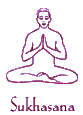
Classic Agni Yoga Glossary
Treasury of Terms and Thoughts

Return to Top
Daily Yoga Practice: Where Heart-Mind and Body commune
Yoga Classes for All Ages
Beginners ask, "How do I safely learn to execute the postures required in yoga?"
Study, practice, patience, repetition and conscious breath work are necessary for proficiency for all body types. The feelings of euphoric lightness, an ultimate release and an overall assessment of receiving exactly what you needed is an indication of an effective practice. The key is to establish and commit to a consistent home practice. I reference the following sites for your review, consideration, understanding and ease of application. ~~Cheryl Allen-Hunter
Yoga for Stress Relief
- desireerumbaugh.com *LOVE IS STRONGER THAN FEAR

Here are some questions to ask yourself about dedicating some time to take care of yourself

JUDITH HANSON LASATER: 5 Tips got Developing a Regular Home Yoga Practice
Examples of How to Approach and Safely Engage in Yoga Postures:

Cobra Pose (Bhujangasana): How To Perform It Safely

Extended Puppy Pose: Step-by-Step Instructions
Life can be stressful, but yoga can help. Our stress relief classes are designed to help you relax, unwind, and let go of the worries of the day. Join us for a class and feel the tension melt away.
Yoga for AGELESS Athletes
Aging gracefully is another subject matter of concern for mostly everyone. Practices that are indusive to health and wellness of body, mind and spirit; eating what is good for you, includes your conscious and selective intake of food, media, entertainment, type of work and playtime; as choices made of what you watch, listen and read, ie., TV, Podcasts, Social Media, News, books, music, game materials and the amount of time spent; including all your internal self-talk, conversations with self and others, in addition to your opinions on what you think and hold dear, even what you envision, as well conscious and unconscious dreams and fears. Listen, hear! Say and think of what you want (to manifest), not what you do not want! It takes repetitive and powerful feats of mental athletics, and a heart-felt commitment to tame, then transcend the mundane, by creating spaces of silence for refinement, clarity and regeneration.
~~Cheryl Allen-Hunter
The exercise of consciousness is the yoga of the heart!
In the PDF Viewer below is a complementary article, 'My Definition of Aging Gracefully' by Desiree Rumbaugh
Featuring: YOGINI AND AUTHIOR Desiree Rumbaugh
Yogini and Author of My Definition of Aging Gracefully (see above pdf), and co-author of Fearless After Fifty: How To Thrive With Grace, Grit and Yoga, as well Yoga to the Rescue Collection. Desiree is also pictured to the right.in Virabhadrasana III, or Warrior III. This asana is also known as Eka Padasana or One (Footed) Legged Pose,
how to flourish in midlife with yoga. Written by two internationally known teachers, Desiree Rumbaugh and Michelle Marchildon,

Copyright © 2000-2024
Cheryl Allen-Hunter, Agni Yoga (Sacred HeartFire) © All Rights Reserved.
Email: callenhunter@gmail.com
Website Updated: April 2024
- About Cheryl
- Services
- Contact Info
- Sponsorship
- E-Store
- Special Thanks To You
- Aum My Students
- Sun Salutations
- Academy of Anatomy
- Sanskrit
- Meditaton
- The Science Of Agni Yoga
- Psalms Of The Heart
- Sacred Hymns To Agni
- Heart Of Consciousness
- Misterios De Ioga
- Pre-Eminent Domain
- The Power Of Yoga
- Newsletter
- Calendar
- Heart Practice & Pricing
- Artisan Class & Videos
- WebBlog
- Highways To Center
- Universal Yoga
- Site Map
AGNI YOGA ZenStudio B